




Best Tiffin Box for Corporate Employees: A Guide

Tiffin Box for Corporate Employees, Product Roundup & Procurement Guide
Most HR departments and office managers feel lost when tasked with picking the right tiffin box for corporate employees. The market’s flooded with variants, every brand claims theirs maintains temperature or stops leaks, and “branded gifting” is thrown about as a given, even if nobody recalls who used their last promo lunch box. Yet, underneath all this noise, the question is simple: if you were procuring for your own office, what would actually work, and what would survive daily use?
Let’s start by being specific. The main groups you’re buying for: employees bringing lunch, HR or procurement teams buying gifts in bulk, anyone layering boxed lunch delivery (or classic tiffin service) into official benefits, and decision-makers exploring the “sustainable gift hamper” trend. In all cases, your endgame is the same: find products with actually leak-proof seals, robust steel or safe plastics, insulation or heating that’s not just theoretical, and vendors willing to do small pilots, offer branding, and execute at a pace matching your company’s attention span.
This roundup isn’t just a listicle of options, it’s the playbook I wish someone handed me a decade ago. You’ll find: quick “just-tell-me” picks, a granular side-by-side comparison, checklists for procurement, a street-level guide to what matters in real deployments, case studies that survived actual use, and an FAQ. Note: playful yet durable designs, think Basil’s family-friendly bento, have moved from kids’ aisles to serious employee recognition programs.
Top Picks: Best Tiffin Box for Corporate Employees (Quick Recommendations)
Milton Knight 5 cont (if you need multi-compartment, all-day utility), Classic: stainless inner containers, insulated shell, 3,750 ml across five 750 ml boxes. Why it matters: it’s the rare setup where you can pack every meal (even snacks) and not have oil seep between layers. Price: ₹1,668 retail, but you’ll want to negotiate for real volume. Use case: everyday office use or when cafeteria alternatives are in play.
Milton Econa 3 tiffin with bag (if you care about budget and simplicity), Thermoware build, steel inside, 3 × 300 ml: not glamorous, but you can source in minutes from major marketplaces. Paired bag feels nice, and it slots right in for affordable lunch-delivery integration.
Milton Electric / Detachable Electric Heating Lunch Box (for the “no-microwave” office), Heating lunch boxes, in practice, are a niche, but invaluable for microwave deserts. Steel containers, insulation, variants for every appetite. Expect to pay ₹1,029–₹1,210 depending on configuration. Most feature auto cut-off so your office doesn’t trip circuits, and yes, they really work through winter.
Apollo / Branded Insulated Lunch Bag Combos (for insulation or premium bundles), Insulated totes with licensed, executive designs, as well as solid steel-combo models around 700 ml. Ideal if you want to up your gifting game, think food storage bag or lunch bag+backpack bundles paired with client onboarding.
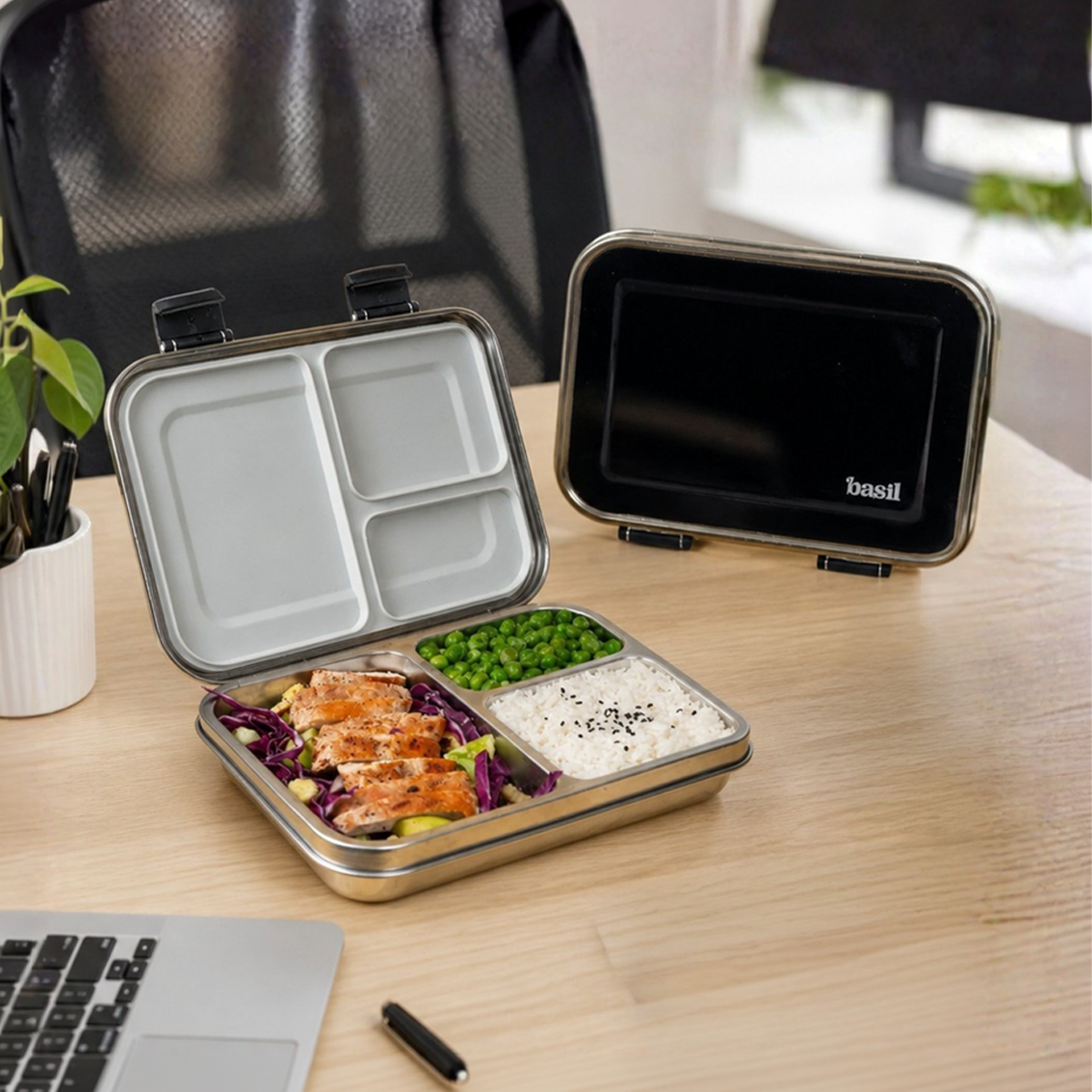
Basil Leakproof Stainless-Steel Bento Box (king for branded & family-friendly gifting), Stainless steel, BPA-free, silicone-sealed, capacity choices from 750–1,500+ ml, 2–5 compartments. Standout: “no-leak,” fun designs, and a real 6-month warranty. Bulk discounts: always ask for a corporate quote, it’s a favorite in premium branded gifting, and they’ll send samples.
Branded Bento by fête (when promotional and premium matter more than utility), The margin is in the message with these: think festival freebies, premium HR gifting, or as centerpiece in a sustainable gift hamper.
Executive Bundle: Insulated Stainless with Backpack, For those making an impression on leadership or high-touch clients; double-walled stainless paired with an executive backpack for a full premium kit.
Quick Procurement Match
If you just skim, memorize this: Milton multi-container for day-to-day use; Basil’s leakproof, designed bento for gifting (and family-friendliness). If you’re deploying to hundreds on campus, consider logistical combos (dabbawala model, urban logistics), and always get terms on MOQs, samples, and discounts before sending out your company’s next promotional freebie.
Specs & Supplier Terms: Side-by-side Comparison
Product Name |
Material |
Capacity |
Compartments |
Insulation/Heating |
Retail Price |
Supplier Notes |
|---|---|---|---|---|---|---|
Milton Knight 5 cont |
Stainless steel inners, insulated plastic exterior |
3,750 ml (5×750 ml) |
5 |
Retains heat for hours (per vendor) |
₹1,668 |
Durable, best for daily/cafeteria; get bulk/MOQ terms in writing |
Milton Econa 3 tiffin (with bag) |
Thermoware + SS inners |
~300 ml/box |
3 |
Basic insulation |
Varies, usually low |
Budget, insulated, solid for scaled gifting; always confirm for bulk break |
Milton Electric / Detachable Electric Heating |
Stainless inside, insulated case |
~800–1,800 ml |
1–3 |
Electric, pre-heat 15–30 min; auto cut-off |
₹1,029–₹1,210 |
Actual lifesaver if the office bans microwaves; double-check auto cut-off/test reports |
Stainless, BPA-free lid, silicone seals |
~750–1,500+ ml |
2–5 (SKU-specific) |
Truly leakproof, can pair with ThermoTOT jars |
By quote/corporate discount |
Themed SKUs for gifting, real 6-month warranty; pilot with samples |
How to read: Look for the 900ml “full meal” stainless option (most brands hit this size), confirm dishwasher guidance (usually pull out seals), touch base on warranty (Basil is transparent at 6 months, ask others). Vet suppliers: can they deliver on time, run pilots, handle custom branding, and provide supporting logistics or smart locker deployment? The actual purchasing shortlist should come from these details, not catalog optimism.
Corporate Procurement: Supplier Checklist
Cliché but true: if you skip the checklist, something will bite you. Ask for: exact plant/hygiene certifications (especially if you combine with food programs), sample and return policy, MOQs and break pricing, honest lead times, and what warranty means in practice. Budget for: sample approval 2–3 days; production 7–14; shipping PAN-India 3–6 after dispatch. MOQs: assume 50–500 for gifts, sometimes pilot runs as low as 10 units are green-lit. Basil’s SKU catalog is worth browsing for design and warranty ideas. Milton benchmarks: Knight 5 at ₹1,668 retail; electric boxes ₹1,029–₹1,210; Econa ~₹300/container.
Supplier Testing
Don’t listen to claims, ask for samples. Test for leakage, dishwasher integrity, heating function (electric model should trip auto cut-off).
Push for answers on replacing seals, lids, and warranty service timeframes.
Branding, Sustainability, Bundles
Ask if they’ll mock up branded boxes, custom bags, or do premium bundles (think executive backpack).
If sustainability is on the agenda, request options for biodegradable inserts or full sustainable hampers, not all claims here are more than buzzwords.
Logistics & Distribution
What’s their delivery game? Do they have dedicated fleet, logistics partners, or will they integrate lockers for distributed staff?
For complex rollouts, look into dabbawala-inspired or city-specific tiffin service partnerships to prevent delivery chaos.
How to Request: Email requesting detailed bulk quote, sample, procurement references, and ask for any measurable case studies (employee uptake %, waste savings). Your procurement process will move 2× faster with real numbers, not just catalogs.
Buying Guide: What Matters When Choosing a Tiffin Box
Capacity: Don’t overthink, most employees need 700–1,000 ml for a meal. 900 ml is the sweet spot. For simple sandwiches or salads, you can get away with less; for hot food, bowl style wins.
Material/Safety: Stainless steel lasts practically forever. Use BPA-free plastic only when you need low weight. Most “dishwasher safe” labels mean you still pop out any silicone gaskets first.
Compartments: Sometimes less is more: solo bowl for basics, three-containers for variety, bento for overachievers. Bentos turn lunch boxes into gifts with a second life.
Insulation/Heating: Compare actual hot retention. Electric lunch boxes really do provide “office microwave in your bag,” but always ask about certification and demo first. Basic insulation is easier and works for the short commute; the rest is all in user behavior.
Branding & Logistics: If gifting, always demand a mock-up, don’t settle for clipart. Production lead time usually sits at 7–14 days; MOQs 50–500 units. For serious scale or frequent office moves, dry run the smart locker or local food vendor distribution model.
Deployment/Maintenance: Pilot with a small group, bundle with prep kits to ensure usage, give access to cleaning instructions, and include a food-grade storage or insulated bag for those who will actually carry it to work.
Reviews, Metrics & Practical Case Studies
Stories persuade more than specs. When shortlisting vendors, don’t just ask for references, get “show me” evidence.
Pilot: Leakproof Bento + Smart Lockers
An enterprise tested Basil’s bento (with themed designs, 750–1,500 ml, 6-month warranty) and paired it with pickup from smart lockers. Useful evidence: photos, videos, and “before/after” uptake and waste numbers. Always push suppliers to share real assets.
Sustainability + Urban Logistics
A company layered reusable tiffins with local tiffin services, borrowing on the famously efficient Mumbai dabbawala system. Insist on hard numbers (waste reduction, satisfaction rates) instead of pre-packaged claims.
Heating & Trials
Before scale, offices piloted Milton electric lunch boxes (auto cut-off, ~₹1,029–₹1,210) for actual heating consistency. Apollo-style 700 ml insulated lunch bags tested as a non-electric option for teams comfortable with ambient warmth.
What to demand from suppliers: not just reviews, but clear metrics, employee uptake %, meal cost compared to corporate catering, sample turnaround, real delivery plans. When gifting, verify branding, sustainable packaging, and shipping timelines the same way you’d check a supplier’s references in any other (more expensive) procurement.
Procurement FAQ, What Procurement Really Asks
What’s the ideal tiffin capacity for employees?
700–1,000 ml per head covers most, with a “default” of 900 ml steel for full meals. For multi-course or snacks, multi-containers (like Milton Knight 5, 3,750 ml total) are gold.Is a self-heating/electric lunch box safe for offices?
Yes, assuming certified models, used as intended. Look for auto cut-off and thermostat features; test before issue. Milton’s electric hits this at ~₹1,029–₹1,210.What MOQs and lead times should we expect?
Branded units sit at 50–500; pilot runs can drop to 10. Design approvals: 2–3 days; production: 7–14. Always clarify at first discussion, assumptions kill timelines.How do you pick between steel, insulation, heating?
Steel for durability maximum; wrap with an insulated bag for commute. If constant heat is mission-critical, only electric lunch boxes fit the bill, but keep an eye on the certification.Advice for distributed team logistics?
Lean on vendors with urban delivery, logistics fleet, or smart lockers. “Distributed” can mean dabbawala-style last mile or tiffin partners in every city. It’s not one-size-fits-all.Best for gifting vs daily-use?
For gifts: go bento, with your branding (Basil, fête) and lean into sustainable packaging. For daily grind: tough, affordable steel (Milton Econa or Vector II) and replaceable containers that take a beating in a backpack.
Action Plan: How I’d Buy for My Team
Begin with a shortlist, maybe three SKUs: a steel multi-container for the utilitarians, the leakproof, branded bento for culture and gifting, and one solid electric lunch box for those needing desk heat. Test all, gather real samples and quotes, and pressure suppliers for proof (not just catalog anecdotes). If it’s a serious gift, combine bento with branded bags or a proper executive kit.
Logistical scaling isn’t just a checklist: work with real urban logistics (fleet partners, city tiffin vendors), pilot smart-locker models if your team is spread out, and borrow proven distribution from Mumbai’s dabbawala when density demands it.
If you want, I can put together a short RFP draft to send to suppliers for real-world responses, tailored sample requests to Basil for SKUs, or even a headcount-driven calculator for ROI on a company lunch program. Just let me know which will give you traction fastest.
Our Notebook
Tips. Ideas. Inspiration for parents.

Efficient Tips for Packing School Lunches Quickly
Discover quick and efficient tips for packing nutritious school lunches that kids will love, making mornings less stressful for parents.

Creative Ideas for Packing Fun Kids Lunches
Discover exciting ways to pack healthy and fun lunches for kids. Explore creative ideas, expert tips, and nutritional insights for balanced meals.

Discover the Nutritional Value of Indian Food
Explore the nutritional richness of Indian cuisine. Uncover how traditional dishes contribute to a balanced, flavorful diet.