




Top 10 Healthy Bento Snack Ideas for Kids This Summer

Top 10 Kids’ Favorite Bento Healthy Snack Ideas for Summer
Top 10 Kids’ Favorite Bento Healthy Snack Ideas for Summer isn’t just a list, it's a toolkit for parents, anyone shuttling kids around to parks, or counselors sketching out tomorrow’s snack plans. Most articles like these are just Pinterest fodder. The trick is to surface things kids will not only try, but actually finish. If you’ve ever packed a carefully constructed snack and watched kids discard half of it, you know this territory. This guide exists to help you assemble bento boxes and capsule lunch systems with foods that check all the boxes: eaters finish them, packing doesn’t eat up your evening, and everything is recognizable and packable. Plus, this isn’t just a set of recipes, you get a functional packing method, a concise shopping list, and a way to stop reinventing the wheel when planning summer snacks. For more seasonal ideas and quick recipes, see 14 Best Summer Lunch Box Ideas, Quick Recipes & Road-Ready Tips.
This kind of approach can reboot tired lunchboxes, especially in summer when routines scatter and school, camp, and outings blur together. What follows isn’t a random top-10 countdown but a collection of focused “recipe cards,” a practical chart on food-safety and packing (which matters more than most parents realize), container and tool recommendations (with notes on why stainless steel ends up worth owning), an integrated shopping list, a side-by-side comparison of nutrition, a 5-day prepping rhythm, and a sharp FAQ meant to answer what you’ll actually wonder after trying this.
How to Use This List: Rethinking Bento for Real Kids
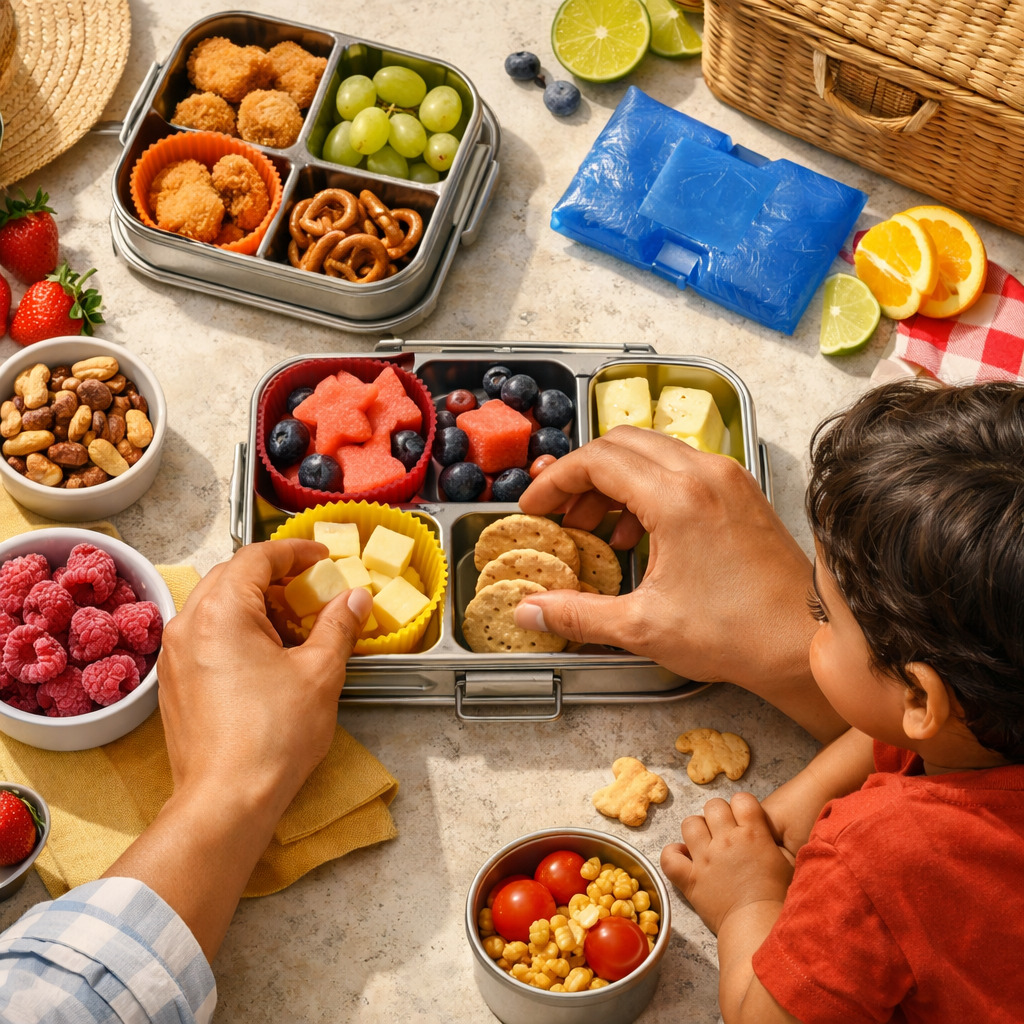
Instead of memorizing snack lists, let these ideas rotate in and out of your summer routine, school, camp, day trips, or any day that runs on bento box lunches. The motive for each entry is not just healthy snacking, but healthy snacking that’s likely to get eaten. Each was stress-tested for portability, packability, and buying you a little time in the morning. One subtle trick: something as simple as frozen raspberries can be both a cooling hack and a snack, so drop those into a pouch or corner of the bento, and you get two problems solved for the price of one fruit.
Mix-and-Match: How to Think About Packing
If you’ve craved the calm of “snack board dinners,” shrink that to a mini snack board: a few crackers, a couple cheese cubes, a bar. Layer it in a bento; it lands as a meal, not a pile of crumbs.
Heading out for a road trip with kids in back? Skip anything finicky (like yogurt bark); pack things you can ignore for a few hours, like roasted chickpeas or dense energy bites. But for lunchboxes that land in a fridge at school or camp, you can go colder and more perishable: yogurt bark, a homemade popsicle (if you trust your ice packs).
Swap at will: sunflower seed butter scores high if you’re dodging nuts at school, gluten-free crackers for celiac-friendly homes, dairy-free yogurt to skip lactose.
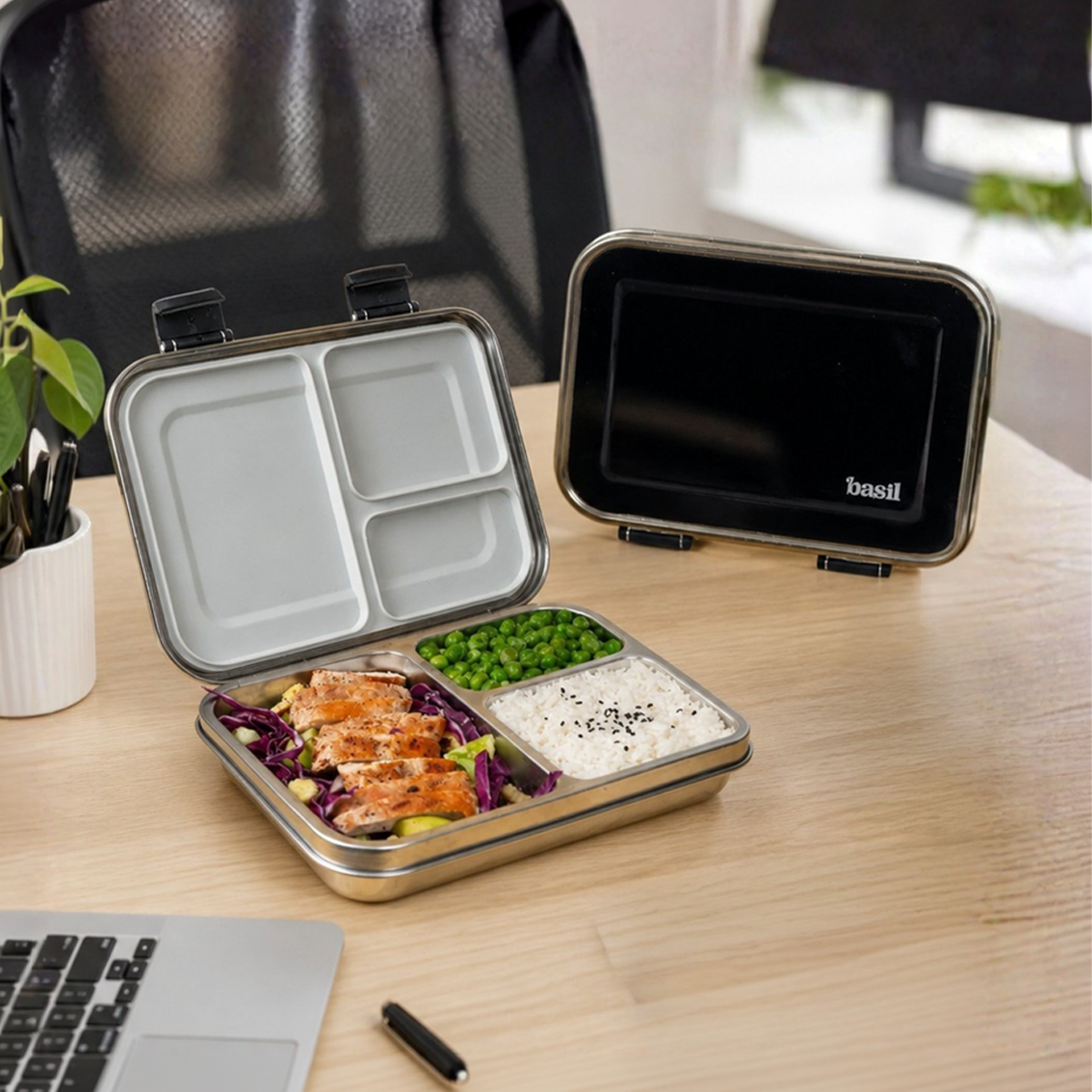
Insulation works by degrees (literally): packing parfaits or egg cups? Use a pre-chilled food jar or a good stainless-steel box (like those Basil makes, expect prices in the ₹1599–₹2499 band, but amortize over a year and see if it stings less).
Sustaining Variety
Don’t just repeat the same box every day; let these serve as a set of interchangeable “blocks.” One day: turkey and cheese roll-up mingling with fruit kabobs. Switch it up the next: banana sushi and an energy bite stashed away. The rotation keeps kids from tuning out and saves you the mental squinting of wondering what you packed the week before.
Summer Packing and Food Safety: Why It’s Half the Game
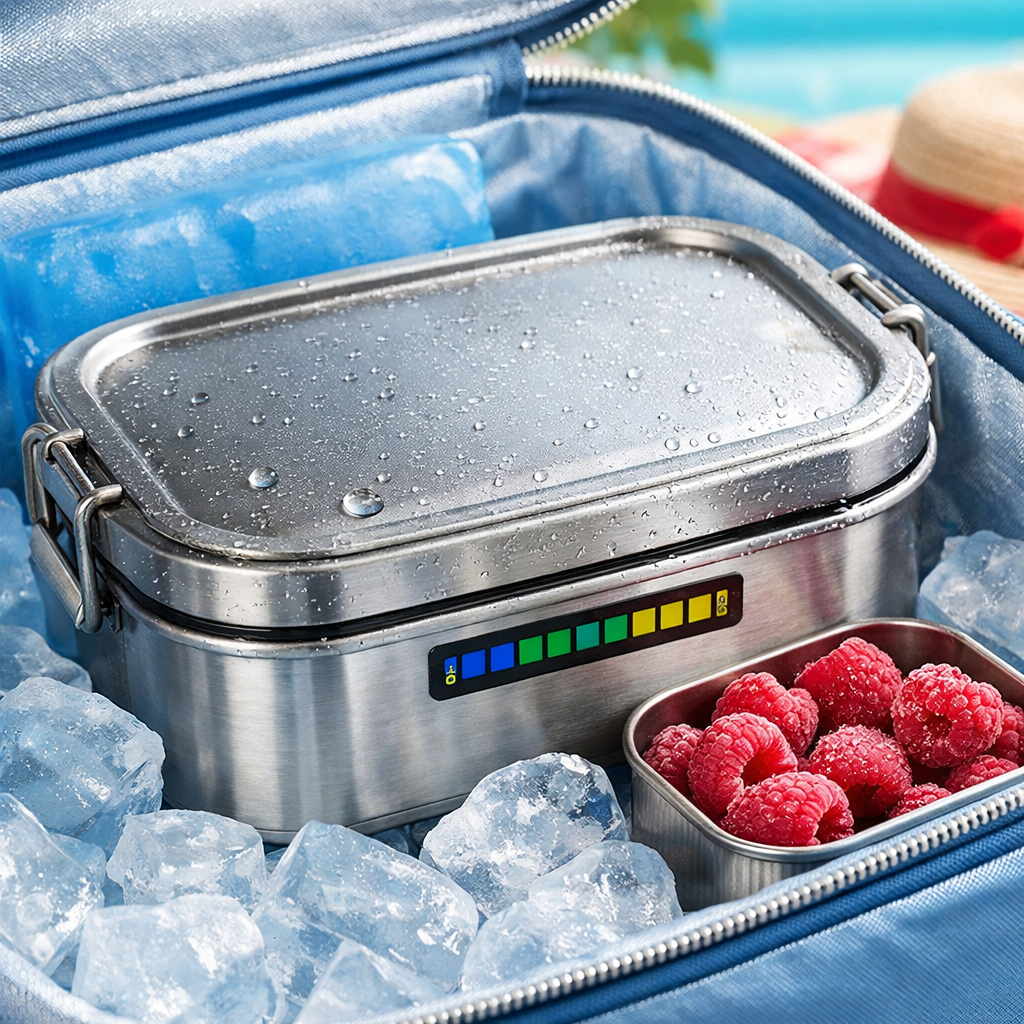
In the winter, you can almost disregard perishables. Not so for July: by ten a.m., a poorly packed snack is half spoiled. The trick is not chasing elaborate cold packs, but thinking simply: insulated steel, minimal air exposure, frozen fruit doing double duty as snack and ice. Remember this rule (almost always true): keep anything perishable under 2 hours out of the fridge, especially if you’re at the park or in a hot car. Chilled items need to hit below 40°F to actually be safe.
How to Beat the Heat
A few frozen raspberries next to your yogurt bark or snap-tight jar buys you 30-60 extra minutes of chill. This is the bento equivalent of lining your pockets with hot packs on a ski trip.
Ice packs don’t cool in all directions, place them at the top or next to eggs/dairy, not on the bottom of the box. Cold travels down; help it along.
Pre-chill your containers when possible (pop in the freezer for 10 minutes before filling), and trust leakproof, stainless tools for the sort of snacks you really don’t want leaking.
Modes: School versus Travel
For school: use fresh fruit, frozen raspberries, and temperature-proof jars. For longer road trips (think more than four hours), prioritize foods barely affected by ambient temperature, roasted chickpeas, energy bites, and lock everything in steel containers or a cooler if you can swing it.
The Only Checklist You’ll Ever Need
Container labeling seems fussy until you’re collecting mystery boxes after soccer. Names and dates, always, and if you’re feeding toddlers, short skewers beat long for lunchbox kabobs.
Gluten-free packing? Stock up on GF crackers, oats, the basics. Nothing slows you down like realizing your star snack can’t go in the box.
Good packing comes from the container as much as the food: durable, compartmented, with a lid that fits. Basil’s stainless bento box Quad (₹2499) is a favorite for a reason, it prevents snack migration and holds up after months of abuse.
Gear Up: The Right Tools and a Consolidated Shopping List
Containers and Tools That Don’t Fail
Half the battle of getting this stuff right is in containers. Insulated, leakproof, and with enough compartments to prevent the yogurt from fusing with the granola. Stainless steel has a cost up front, but after the third warped plastic box or failed “BPA-free” snap, you’ll be glad to own one. Basil’s line (Bento Quad, ₹2499; Bento Neo, ₹2049) pair up with their bottles and plates, but any genuinely leakproof bento will do. Find a selection of safe, non-toxic kids’ lunch boxes and tableware at Basil Kids Collection.
Keep It Practical
Insulated jars are a non-negotiable for cold snacks: pop in a parfait, a homemade icy treat, even an egg cup for picky eaters.
Silicone cups (preferably leakproof) and reusable snack bags help you create those “snack boards”, slip in crackers and a chewy bar, and nothing goes soggy.
Ice packs and frozen raspberries remain the best edible-cooler combo for lunchboxes, they keep things cold and add instant snack value later.
Capsule-style or compartmented lunchboxes let you mix toddler-sized portions of banana sushi, roll-ups, or even kid-form trail mix that doesn’t become dust in transit.
Combos Worth Repeating
Insulated steel + insulated jar = cold parfait and a *still-frozen* snack after two hours in July.
Snack board = always works. Crackers, cubes of cheese, dried fruit: fast, flexible, allergy-friendly.
Travel configuration: stuff energy bites, roasted chickpeas, and a protein roll-up with an ice pack in a solid container for miles of snacking, not just minutes.
Nutrition: What Actually Matters (and What Experts Suggest)
Pediatric RD, distillation:
How much? For ages 2–4, target 1–2 tbsp protein or dairy. For 5–8, ramp up to 2–4 tbsp; 9–12, it’s 3–6 tbsp. The smart bento trick: a chunk of protein, a dose of fiber, and a little healthy fat. It keeps kids charged up between meals, which is your actual goal.
Sugar: Keep it down. Plain yogurt wins over sweetened; frozen raspberries offer chill and flavor without corn syrup. Set up your snack boards and yogurts the same way and you can shave down sugar without complaint.
Allergy? Skillful swaps make everyone’s life easier: sunflower seed butter for peanuts, GF crackers for the top-eight crowd, and so on.
Water: Often overlooked, but a steel bottle filled with cold water beats juice and keeps kids hydrated. Combine this with whole foods, not just fruit, but roasted chickpeas or turkey roll-ups, and you’ve got the best defense against lethargy by 2pm.
Portioning: Getting the Mix Right
If you look at what actually gets eaten, the winning combo is always the same formula: one protein (a roll-up or egg cup), one fruit/veg, and one grain/fat (energy bite, PB cracker, handful of trail mix). This works regardless of age, toddler, grade-school kid, even an adolescent will graze from the same template. You’ll be able to plan for camp, school, or just a day at the lake without doubling back to re-engineer lunch.
Choosing for Travel vs. Chilling
Energy bites and roasted chickpeas are practically self-stable and beat soggy snacks on any road trip. For bento boxes that stay cold, privilege yogurt pouches and parfaits in their own jars, backed with ice packs and ideally consumed before the two-hour clock runs out.
Snack |
Protein |
Prep Time |
Portability |
|---|---|---|---|
Yogurt Bark |
Moderate (Greek yogurt base) |
10 min + freeze |
Suited for insulated steel containers, freezer-friendly |
Energy Bites |
High (nut/seed/seed butter) |
10–15 min + chill |
Travel-ready, made for snack bentos |
Turkey Roll-Ups |
High (protein meat/dairy) |
5–10 min |
Stays fresh if pre-chilled and secured in insulated packs |
Fruit Kabobs |
Low |
8–10 min |
Portable using short skewers, stays cool with frozen berries nearby |
Weekly Prep: The Five-Day Make-Ahead Plan (and How to Stick With It)
Solve lunch in one swoop by making this five-day prepping grid your backbone. If you’ve ever packed lunches at 11pm and wished for something mechanical, this is the answer. It works in summer, during back-to-school, and for anyone managing more than one kid’s box at a time.
Day 1: Make a full sheet of yogurt bark (store in freezer bags) and roast a sheet-pan of chickpeas. Roasted chickpeas are the Swiss army knife of snacks: pack in bento or road-trip mix. Frozen raspberries do the cooling.
Day 2: Mix no-bake energy bites (your “what’s-in-the-pantry” snack) and layer a snack board with crackers, cheese, and dried fruit. Let bites double as trail mix or the world’s least sticky bars.
Day 3: Bake egg cups, or go wild with pepperoni pizza versions for extra protein. Add banana sushi (slice and stack) and turkey roll-ups. These all assemble at lightspeed in the morning.
Day 4: Portion out apple wraps with peanut butter or make simple peanut butter crackers. Build another mini-board, especially for younger kids or those who snack in waves.
Day 5: Stack yogurt parfaits (remember: stash granola on the side so it won’t go limp) and toss in a treat, a chewy-style bar if allowed. Even sandwich a sticker on top for picky eaters willing to negotiate.
Three Packing Rules Worth Remembering: If granola gets soggy, pack it separate; perishable food left at room temp for more than two hours is lost (unless heavily iced); ice packs and insulated containers aren’t a luxury in July, they’re your insurance policy. Keep rotating to prevent boredom: banana sushi one day, snack board the next, and a roll-up the day after. The kids won’t even realize you’re on a smart rotation.
Real-World Questions, Real Answers
Q: Will frozen yogurt bark or homemade popsicles stay frozen till lunch?, A: Only if they’re packed right before you leave, buried in an insulated pouch, with plenty of ice (frozen raspberries count). Figure between 2 and 4 hours of real freeze. Works best with insulated steel containers, but don’t bet on late afternoon unless you accept a bit of defrosted texture.
Q: Are these ideas nut-free or allergy-friendly?, A: Quite a few, fruit kabobs and turkey roll-ups are obvious. Yogurt bark is safe if made with nut-free ingredients. Where possible, use sunflower butter instead of peanut. Always label clearly, especially in group settings.
Q: Which snacks are gluten-free?, A: The hits are fruit kabobs, yogurt bark, roasted chickpeas, and popsicles. If oats or crackers strike your fancy, buy certified gluten-free. Simple Mills-style GF crackers are a good default.
Q: Are these good for camp or road trips?, A: Yes. The whole list was built to travel. Road trip standbys: energy bites, roasted chickpeas, turkey roll-ups secured in steel boxes or a cooler. They survive hours, not minutes.
Q: Tricks for picky eaters?, A: Mini snack board wins, hands down: small portions, lots of variety, little effort. Play with assembly (funny faces, roll-ups, kabobs) and you can win over almost any preschooler. For under-threes, skip sharp sticks and keep things tiny.
Q: What’s the true cost, and do containers even matter?, A: Homemade snacks almost always undercut store-bought. A solid container pays for itself in a month if you stick with it: consider Basil’s steel lunchboxes (₹1599–₹2499). Freshness, organization, and fewer fridge science experiments aren’t trivial benefits.
For more peer-shared sample menus and parent-tested day-by-day ideas, see this parent post with sample weekly menus: My kids liked Monday: bagels with cream cheese and yogurt cups with fruit...
Our Notebook
Tips. Ideas. Inspiration for parents.

Efficient Tips for Packing School Lunches Quickly
Discover quick and efficient tips for packing nutritious school lunches that kids will love, making mornings less stressful for parents.

Creative Ideas for Packing Fun Kids Lunches
Discover exciting ways to pack healthy and fun lunches for kids. Explore creative ideas, expert tips, and nutritional insights for balanced meals.

Discover the Nutritional Value of Indian Food
Explore the nutritional richness of Indian cuisine. Uncover how traditional dishes contribute to a balanced, flavorful diet.