



Guide to Packing Kids' Lunch Box in India

What to Pack in Kids Lunch Box India, A Practical Guide for Parents
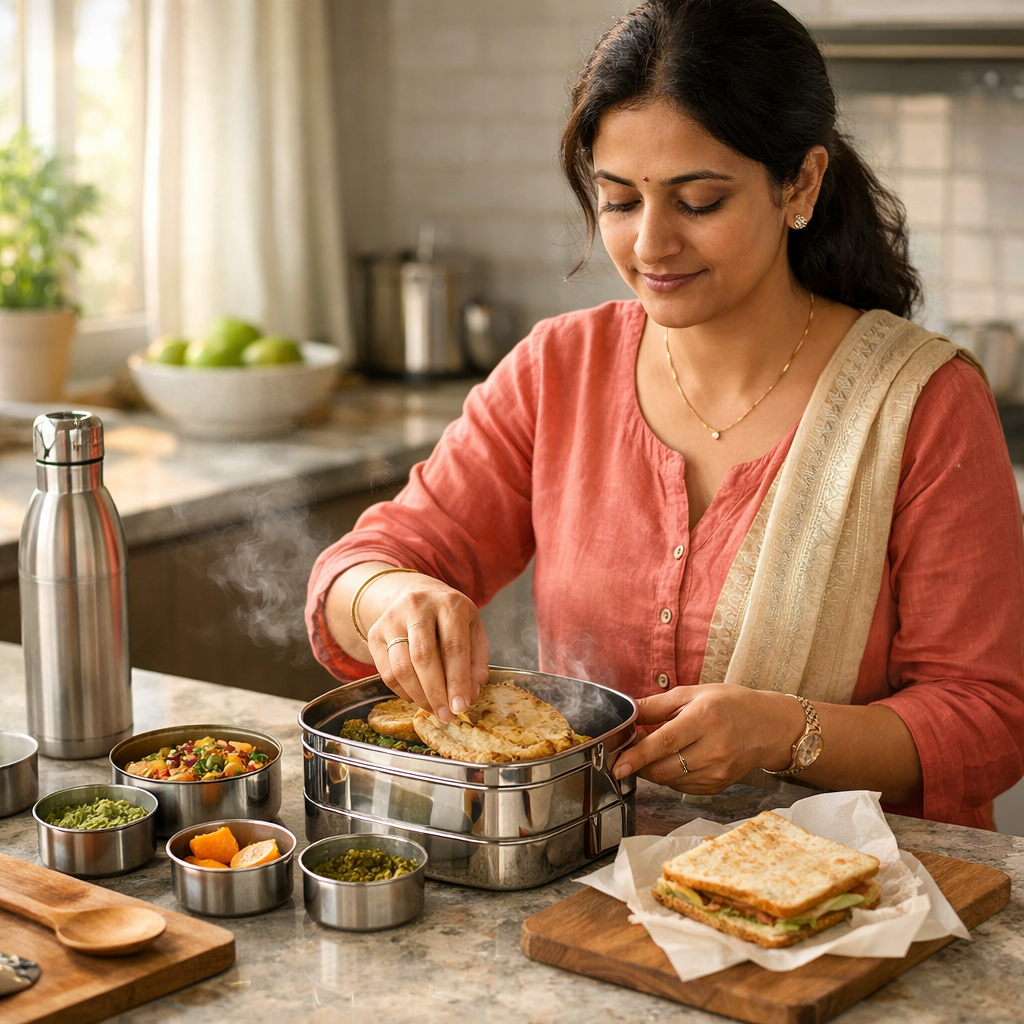
If you’re a parent in India hunting for lunch box answers, here’s the essence: you’re not after Instagram-perfect food art. What you want are meals your child will actually eat, that you can prepare before the morning fog has lifted, packed in containers that won’t leak sambhar all over the inside of a backpack. The aim isn’t glory, it’s logistics, a lunch box that satisfies your child, holds up to Indian school routines, and doesn’t spawn extra work come Thursday night. Below, I’ll walk you through a framework I wish I’d had at the start: what to pack, how to pack it, and how to keep the process boringly reliable, because with tiffins, reliability is a virtue. Stainless steel lunchboxes, pragmatic packing plans, and minimalist recipes combine to keep parents sane and kids fed. Consider this your playbook for Indian school lunches.
1. What Actually Goes Into a Good Lunch Box?
-
Checklist, the non-negotiables:
Grain: chapati, brown rice, millet-based rotis, the base of energy in every Indian home.
Protein: paneer, dal, egg, chickpeas, tofu, without this, the energy crash by period four is real.
Vegetables: a few cucumber sticks or seasonal sabzi, color and crunch are more than just “variety.”
Fruit: whatever is in season, either cut or whole, less for vitamins, more for palette relief after something spicy.
Healthy fats: yogurt, seeds, a smear of ghee or nut butter if the school isn’t nut-free.
Hydration: nothing clever here, just a water bottle, a tiny milk carton for variety if allowed.
Small treat: a sliver of dark chocolate, a homemade laddoo if you’re feeling generous.
The tradeoffs: Lunch is a game of satiety versus sugar. For fullness, whole grains and protein win. Sweets hover at the periphery as rare guests. Where nut bans or allergies crop up, let seeds or tofu stand in. And forget the plastic, a basic stainless steel lunchbox does the work of keeping things separate and unsoggy without fuss.
Vegetarian & non-vegetarian ideas: Most Indian lunch boxes skew vegetarian, that’s what schools (and kids' palates) expect. But we have the luxury of Indian vegetarian proteins: paneer, dal, sprouts, and on lucky days, eggs or chicken if the school permits. Don’t overcomplicate: paneer paratha today, paneer sandwich tomorrow. For portability, roti rolls, or their upgraded cousin, keema (or soy granule) rolls, wrap well if you let them cool before packing. Odours and leaks are rare complaints with stainless steel.
-
Ways to Reduce Pickiness:
Rotate lunches by color and texture, not just flavor: think vegetable wraps, paneer parathas, or rice bowls over the course of a week.
Mix textures even within a single box: crunchy cucumber, cubes of paneer, a chutney to dip, monotony is the enemy.
Let your child pick one non-negotiable item; agency is the shortcut to compliance.
Pre-portion staples and keep a handful of reliable lunch box combinations in mind. A small stockpile sidesteps morning paralysis.
Draw from the Indian vegetarian repertoire, wrap millet sabzi, rotate roti roll fillings, and experiment with bowl formats. Simple, familiar, and fast trumps ambitious new recipes every time.
2. Containers, Why All Roads Lead to Stainless Steel
If you grew up in India, you already know: there’s no material as honest or as durable as stainless steel. Tiffins (the word should be in the OED) last decades, not just semesters. The choice isn’t about fashion, it’s about surviving school bus bumps and over-enthusiastic lunch monitors. The container that works is the one that survives, keeps leaks in check, and isn’t cumbersome for the under-ten crowd.
How to Choose?
Stackable two- or three-tier tiffins, a classic, or the new bento-style partitioned boxes. For hot days (or days with yogurt/raita), insulated models matter; for everything else, sturdy simplicity prevails. Size? It’s an appetite problem, not an age problem, but most find 700–1,000 ml bendy enough to serve. Pick containers with real seals and real steel, nothing ruins lunchtime like cafeteria curry in the bottom of your backpack.
Features to Notice (the Anti-Gimmick List)
Material and Seal Quality: 304 food-grade steel; silicone seals for the non-negotiable leakproof promise.
Leakproof/Insulated Build: For raita, curry, or the inevitable Friday special, proper lids and ice packs make food safe until the bell rings.
Usability for Kids: Easy-open latches and light lids; compartments keep your wraps from fraternizing with your fruit.
Care: Stainless steel = dishwasher friendly, but remember, never the microwave.
For specifics, Basil offer bento boxes designed for small hands and big appetites. Pair them with matching water bottles and call it a day. Menu planning? Search "lunch box ideas for India" and build a rotation from what looks practical, not aspirational.
For western-style compartment designs geared specifically to kids, If you prefer premium leak-resistant Indian-styled four-compartment boxes, check the Mitti collection.
3. How Much, And What For Each Age?
Diet charts are as plentiful as opinions, but here’s the Indian reality: portion by age (and energy output), consult the ICMR (2020) if you want numbers. The real trick is not overstuffing or starving your child, but giving them roughly one-third of total daily energy at lunch and enough protein to fuel focus and growth, about 30-35% of daily needs at lunch. Err on the side of smaller, satisfying, and easy to eat; lunch shouldn’t be a battle zone.
Rough Targets (ICMR Simplified)
4–6 yrs: 1360 kcal/day, 12.8 g protein
7–9 yrs: 1700 kcal/day, 19g protein
10–12 yrs: Boys 2220 kcal/26.2g; Girls 2060 kcal/26.6g
Translating Numbers into the Box
Younger kids: 1 small roti or ½ cup rice. Older kids: 1–2 rotis, or up to a cup. Use the lunchbox to enforce portion sanity; bento models with labeled compartments practically ration the food for you. The Basil Bento Neo, for instance, splits 1,000 ml into manageable chunks: main, veg, fruit. Simplicity for the win.
Age-By-Age Dietitian Tips (Condensed)
Pre-schoolers: soft, no whole nuts, cut fruit, think safety, not novelty.
7–9: more protein, more focus, double up on paneer or egg, reduce sugar.
10–12: calcium matters now, so yogurt, and slightly more grain to match hunger spikes.
This template rarely fails: Monday, paneer paratha, cucumber, fruit, small raita. It’s the kind of lunch that eats itself.
4. Lunch Box Recipes, Recipes That Survive the Bus Ride
Below are recipes that respect the iron law of school lunches: minimal prep, maximum portability, uncomplaining in the face of delay, and unfazed by lack of refrigeration.
Paneer Paratha: High-protein classic. Cool before packing; sandwich with butter paper to prevent gluey edges, and pack the chutney in its own corner.
Roti/Kathi Rolls: Wrappable, handheld, and non-leaky. Stuffing should be on the dry side, paper-wrapped, think of it as an Indian burrito that won’t disintegrate by lunch.
Vegetable Wraps: Good for veggie loading. Use a dry towel to wick off extra moisture and pack dip separately.
Mini Parathas: Snack-size, easy for little hands. Layer with cotton or paper if you want to keep them soft and fresh.
Egg or Cheesy Chapati Rolls: If eggs are allowed, cool filling completely to avoid oil seepage; keep cheese subtle.
Paneer Sandwich: Fast assembly, lightly toasted, shielded with paper to banish sogginess.
Frozen Prep: Make a batch, freeze, thaw overnight, a modern hack for ancient chaos. Insulated carriers pick up the slack when reheating isn’t an option.
No-Reheat Heroes: Roti rolls, paneer parathas, wraps, idli slices, even upma shaped into slabs, these are as stress-resistant as any parent could wish for.
5. How to Pack, Store, and Navigate School Rules
Even the best food is ruined by sog, spills, or school policy. The routine is as important as recipe:
Know the Rules
Check nut bans, reheat privilege, lunch time, refrigeration status: one “no” can change the week’s menu at a stroke.
If the school has no microwave, think cold (roti rolls, parathas, wraps, idlis).
Temperature, Food Safety, and Handling
Always cool hot food before sealing: temperature shock causes condensation and disappointment.
Invest in leakproof, solid steel bento boxes and, if dairy is involved, insulated carriers or small ice packs.
Ice packs can keep yogurt or raita in the safety zone for the first half of the day. Insulated boxes can keep food warm if handled right.
Beating the Sog
Layer breads with butter or special chapati paper (or a clean handkerchief), this is the “anti-sog” foundation.
Liquids (chutney/sauces) get their own sealed container. Cross-contamination invites mayhem.
Reheating Realities
If home reheating is possible, use microwave-safe inserts. At school, only use them if microwaves are allowed; steel never goes in the microwave.
Label everything (tiffins, water bottles) and pre-slice grapes for young children. For lunch, safety comes before speed.
6. Printables, Checklists & Visuals You’ll Actually Use
Printables to Keep on the Fridge
Daily checklist: Breakfast, Lunch, Snack, line up main/grain, protein, veg, fruit, snack, drink.
Weekly chart: Rotate five or six main templates (paratha, roll, idli, etc.).
Shopping list for the week: paneer, whole wheat, eggs, fruit, yogurt, vegetables, seeds, packing paper.
Labels: child’s name, allergies, “heat before serving”, “keep cold”, simplicity keeps substitutes honest.
Visual Playbook
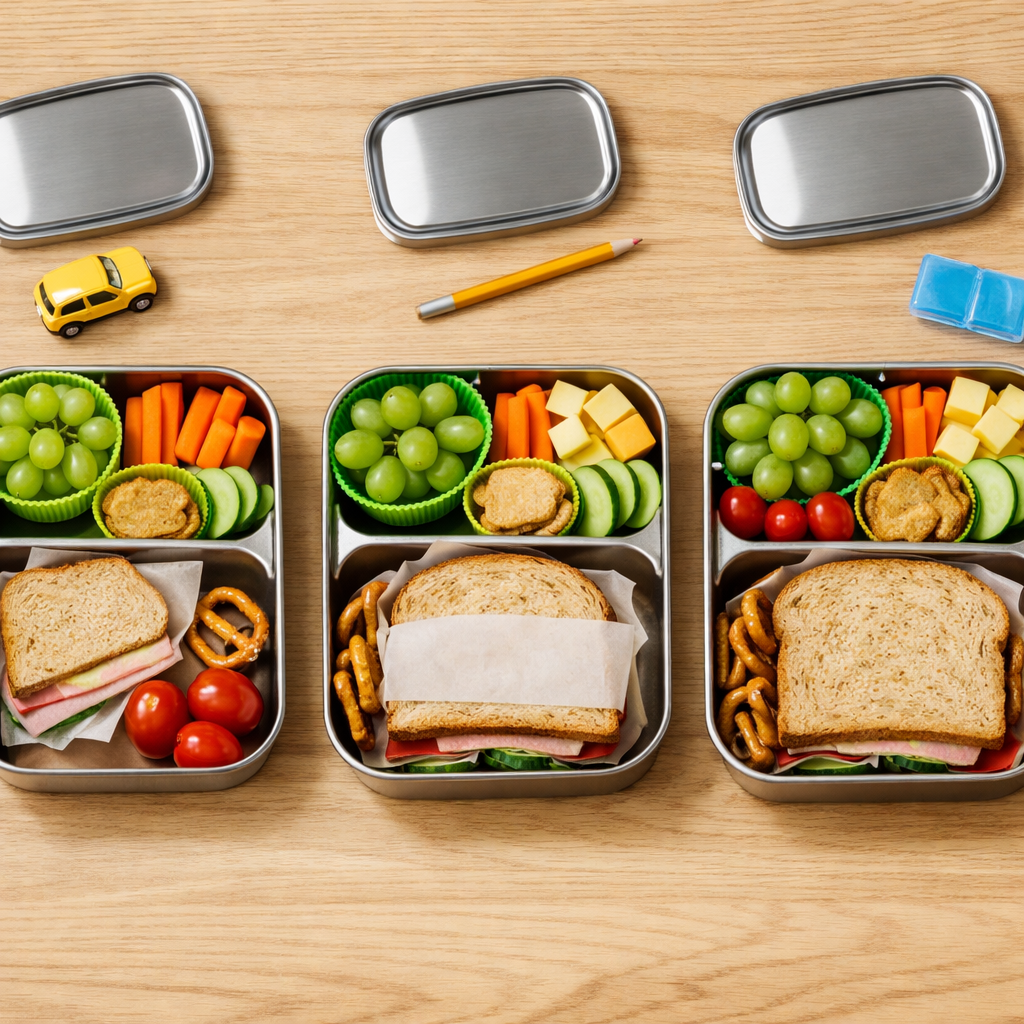
Compartment photos: Overhead shots that show how portions fit, a sanity check and a communication tool for helpers.
Comparison images: Portion sizes for each age group, demystifies the “is this too much?” question.
Mini-recipe steps: Show how to layer, wrap, pack, photos solve what written instructions don’t.
-
Examples in stainless bento boxes, match the photo to the box for a “copy this” reference.
Props That Matter
-
Show the paper/chapati cloth between breads. Demonstrate the humble insulated container and a tiny dip box, “gear” is what makes the system run.
Captions & Discoverability
Use phrases like "healthy school lunch India" in photo captions, search engines still need feeding.
Give each image a note: “For 8-year-old, Monday, reheating needed”, the less the parent has to remember, the better.
7. FAQ, The Questions All Parents End Up Asking
How much roti/rice for a 7-year-old?
About one small roti or ½ to ¾ cup cooked rice at lunch, paired with a decent protein and veg. For protein, aim for about 6–7g at lunch, a third of daily need, and calibrate up if the child returns ravenous.Is stainless steel microwave-safe?
No. It’s food-safe, lasts forever, keeps leaks at bay, but use only in the microwave at home with appropriate containers. Do not microwave steel. For hot packing, reheat at home and send in an insulated box.How to prevent soggy parathas?
Cool before packing, brush lightly with ghee, separate with parchment or cloth, pack wet chutneys in another box. Dry fillings are your ally.Nut allergy swaps for protein?
Seeds (sunflower, pumpkin), paneer, eggs, lentil tikkis, or tofu. All pack well, none involve nut bans or drama.No-reheat, school-safe lunch ideas?
Roti wraps, paneer parathas, veg sandwiches, idlis with podi, poha, all tolerate room temperature and require zero maintenance at school.How to plan a week’s lunches fast?
Batch-cook parathas/rolls, keep a printable checklist, rotate three to four reliable combos, and assemble in the morning. Routine is the superpower here.
8. Packing Checklist, So You Don’t Forget at 6:45 a.m.
Main grain (roti, rice, wrap)
Protein (paneer, egg, dal, sprouts)
Vegetable (raw or cooked)
Fruit (in season)
Snack/treat or seeds
Water bottle (labelled, essential)
Utensils, napkin, ice pack if needed
Allergy note (if relevant)
Morning Routine (2–5 Minutes Flat)
Lay out parts the night before: grains, proteins, veg, fruit, snack.
Use bento compartments or silicone cups to drop portions quickly.
For cold food, use ice packs. For hot, let cool first to prevent sog. Assemble and close, nothing more.
Packing for Anti-Sog
Breads layered with parchment or chapati paper for softness and anti-steam: the low-tech technique that always works.
Treat wet and dry as enemies: chutney/sauces in their own tight containers, only uniting at the table.
Leakproof bento boxes reduce surprise cleanups. Never microwave steel, label accordingly.
Labelling, Safety, School Rules
Name, class on every tiffin/water bottle. Small steps, big time-savers.
If nuts are banned, sub in paneer or seeds. No debates with the teacher later.
Allergy notes inside the bag, if school needs a reminder.
10. Local Search Terms, What Actually Yields Results
If you’re searching online, templates win. Add your city or constraint to get relevant suppliers and recipes:
General: "tiffin ideas India", "healthy school lunch India", "lunch box recipes" (veg/non-veg), "school lunch packing tips".
Box Searches: "best stainless steel tiffin India", "leakproof bento box India", "Basil/Baboons bento review".
Recipe Packing: "paneer paratha lunch box", "roti roll recipe India", "prevent soggy paratha lunch".
Portion & Safety: "ICMR portion size children", "school lunch choking guideline".
Logistics: "lunch box leakproof ice pack insulated carrier", "no reheat lunch box India".
Visuals: "food photography lunch box India", "tiffin idea photos".
Pro tip: Plug in “Mumbai,” “Delhi,” “no microwave,” or your school’s name for even more relevant hits. For a cross-cultural discussion on what kids take to school in the US and some recipe links
Victory Lap: Make Lunch Packing a Daily Win
Packing a school lunch your child will eat, that survives the commute and doesn’t fill you with Sunday-night dread, is about templates, not talent. Rotate five or six core combos, use a steel box that never leaks, and work from the ICMR grid for portions. Batch-cook what you can, and accept that a bit of repetition is the parent’s friend, our job isn’t to amaze, but to deliver. Keep it simple, keep it colorful, and you’ll find lunch stops being a daily firefight and becomes just another solved problem.
Our Notebook
Tips. Ideas. Inspiration for parents.

Efficient Tips for Packing School Lunches Quickly
Discover quick and efficient tips for packing nutritious school lunches that kids will love, making mornings less stressful for parents.

Creative Ideas for Packing Fun Kids Lunches
Discover exciting ways to pack healthy and fun lunches for kids. Explore creative ideas, expert tips, and nutritional insights for balanced meals.

Discover the Nutritional Value of Indian Food
Explore the nutritional richness of Indian cuisine. Uncover how traditional dishes contribute to a balanced, flavorful diet.